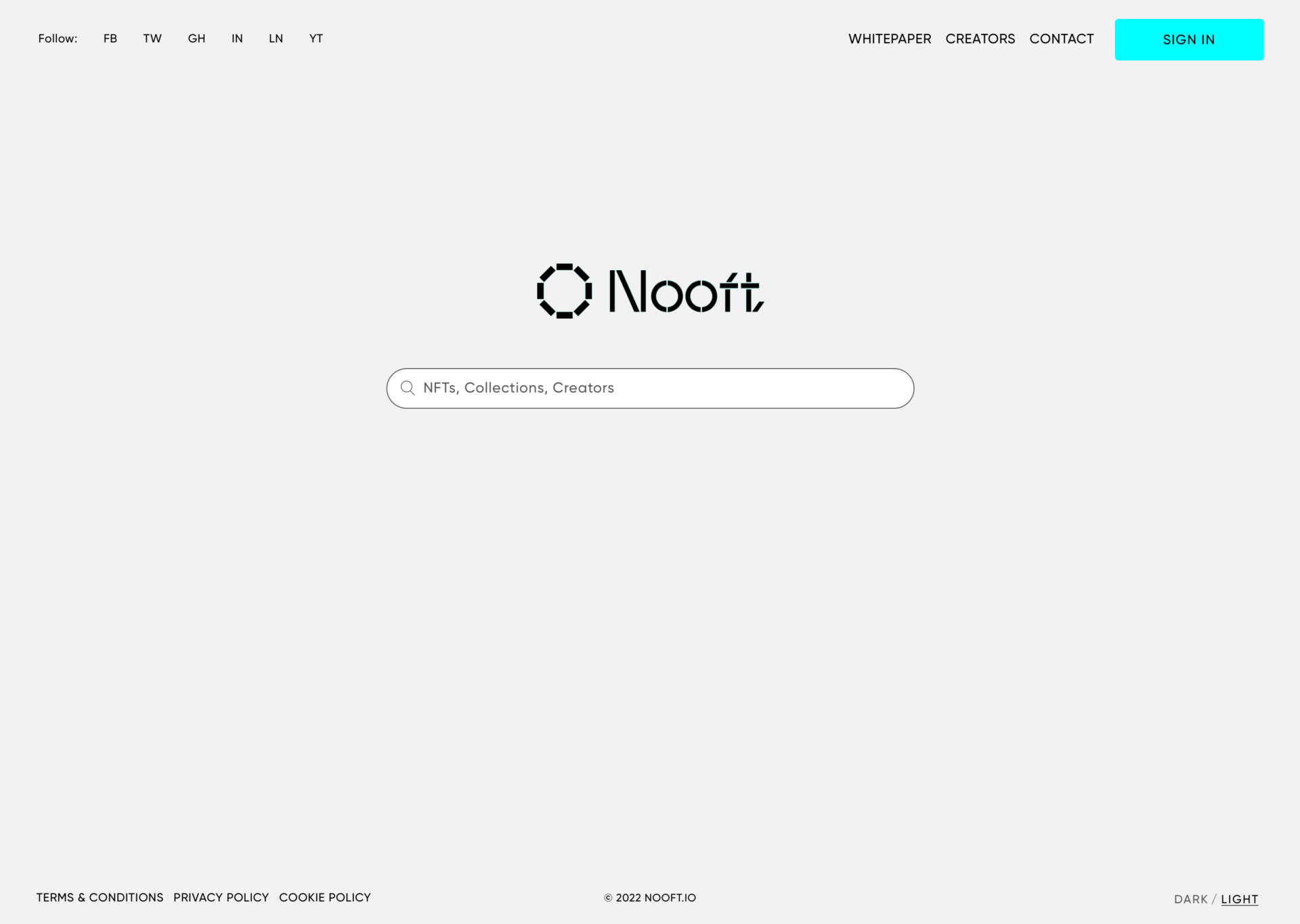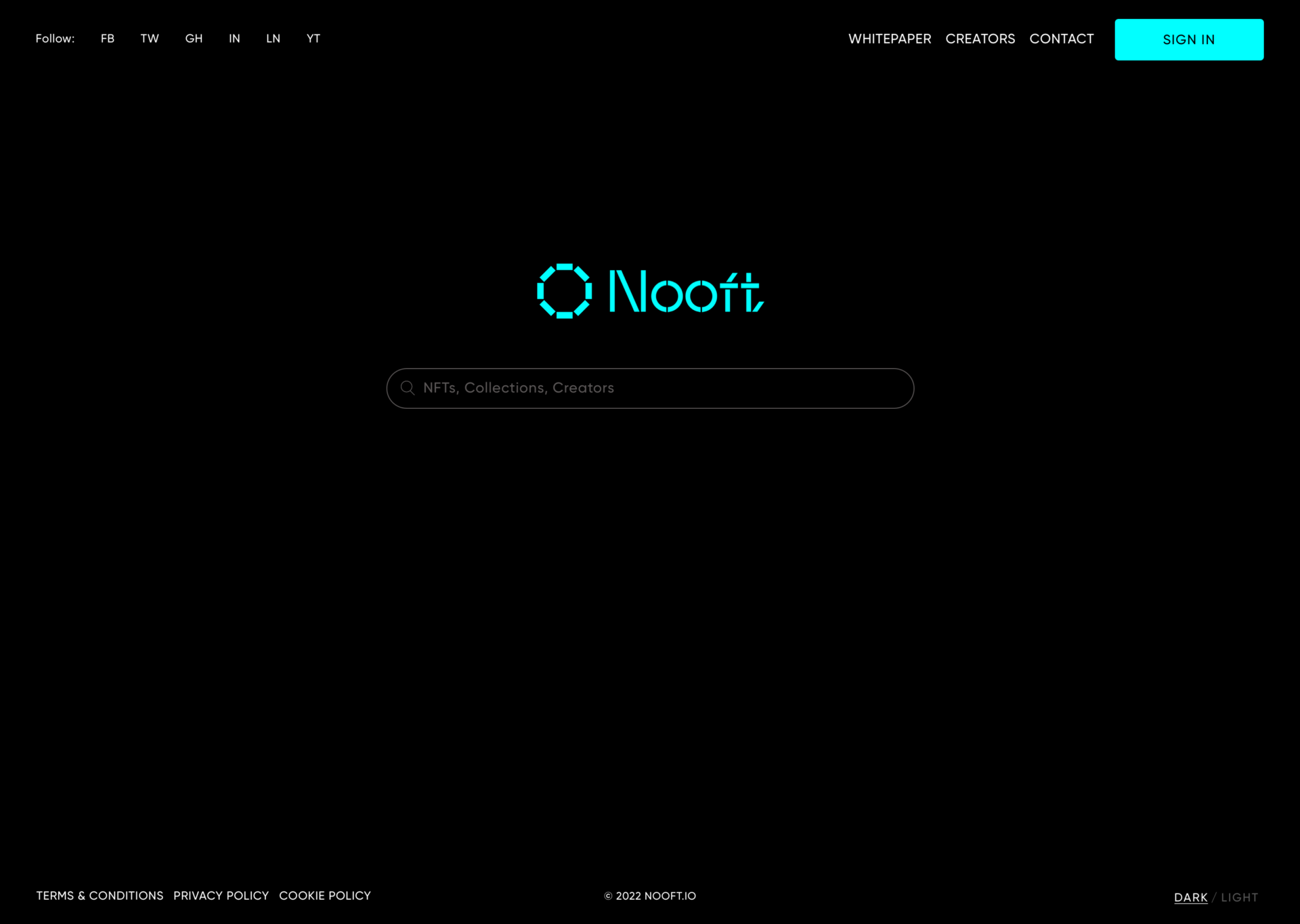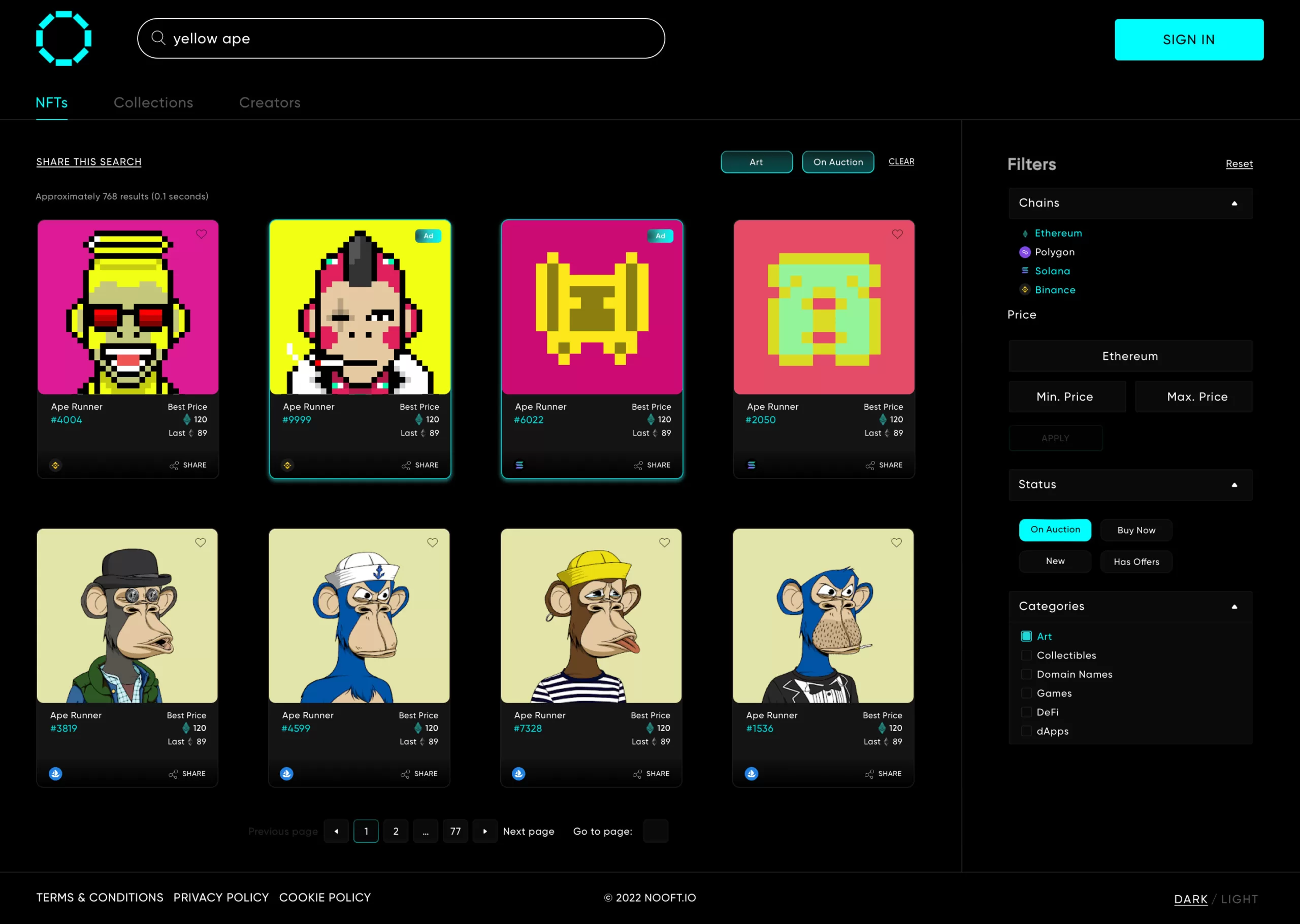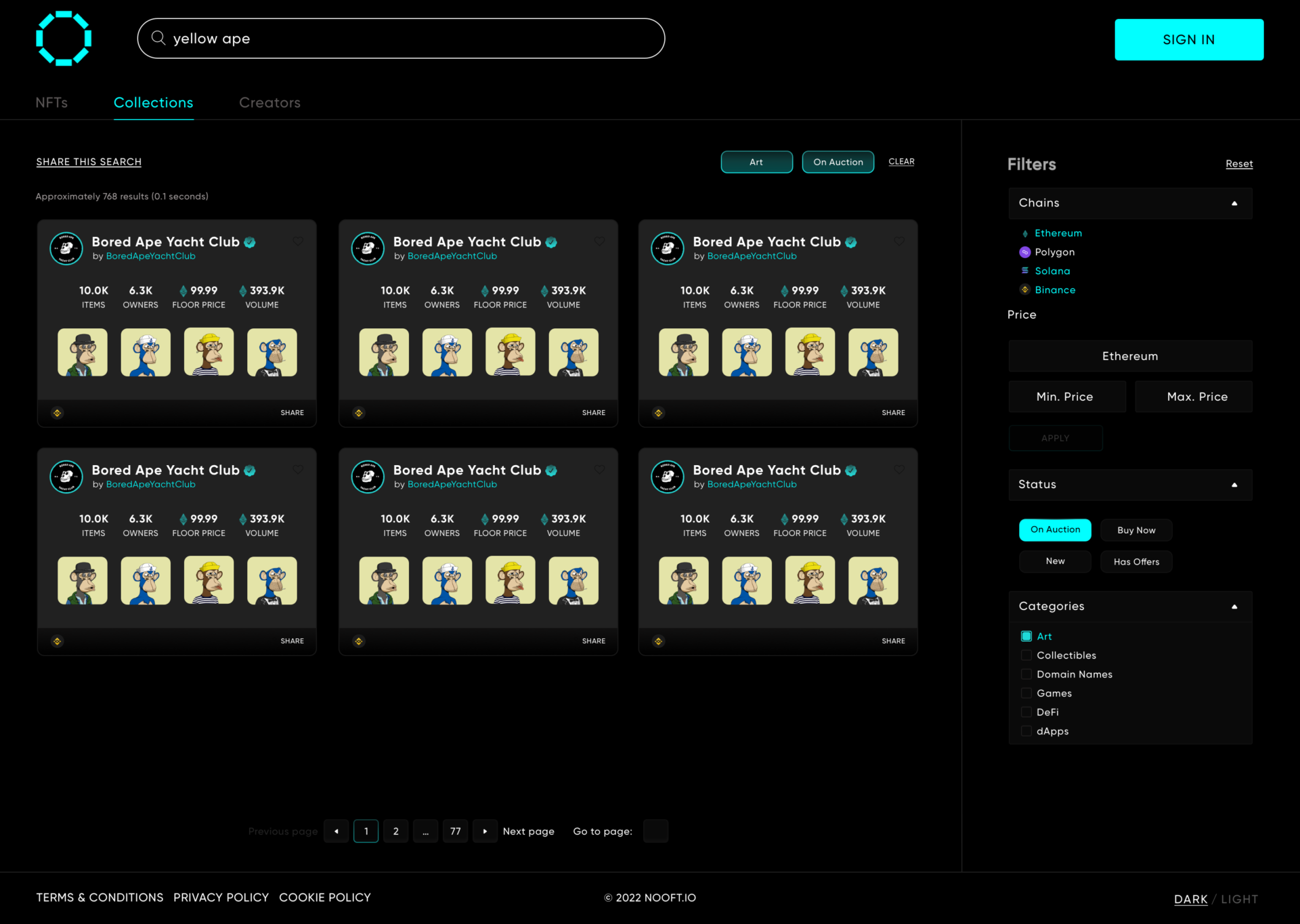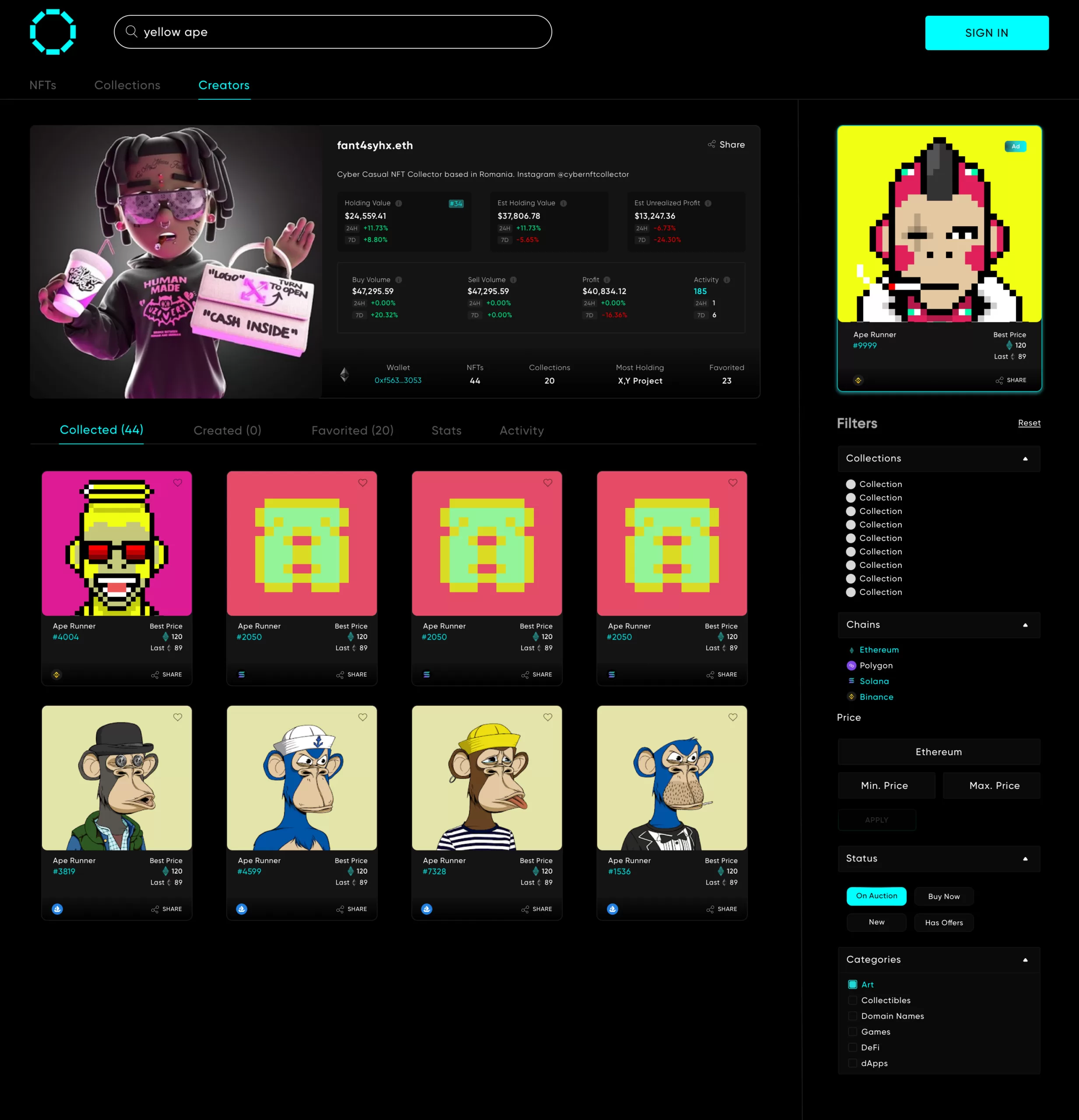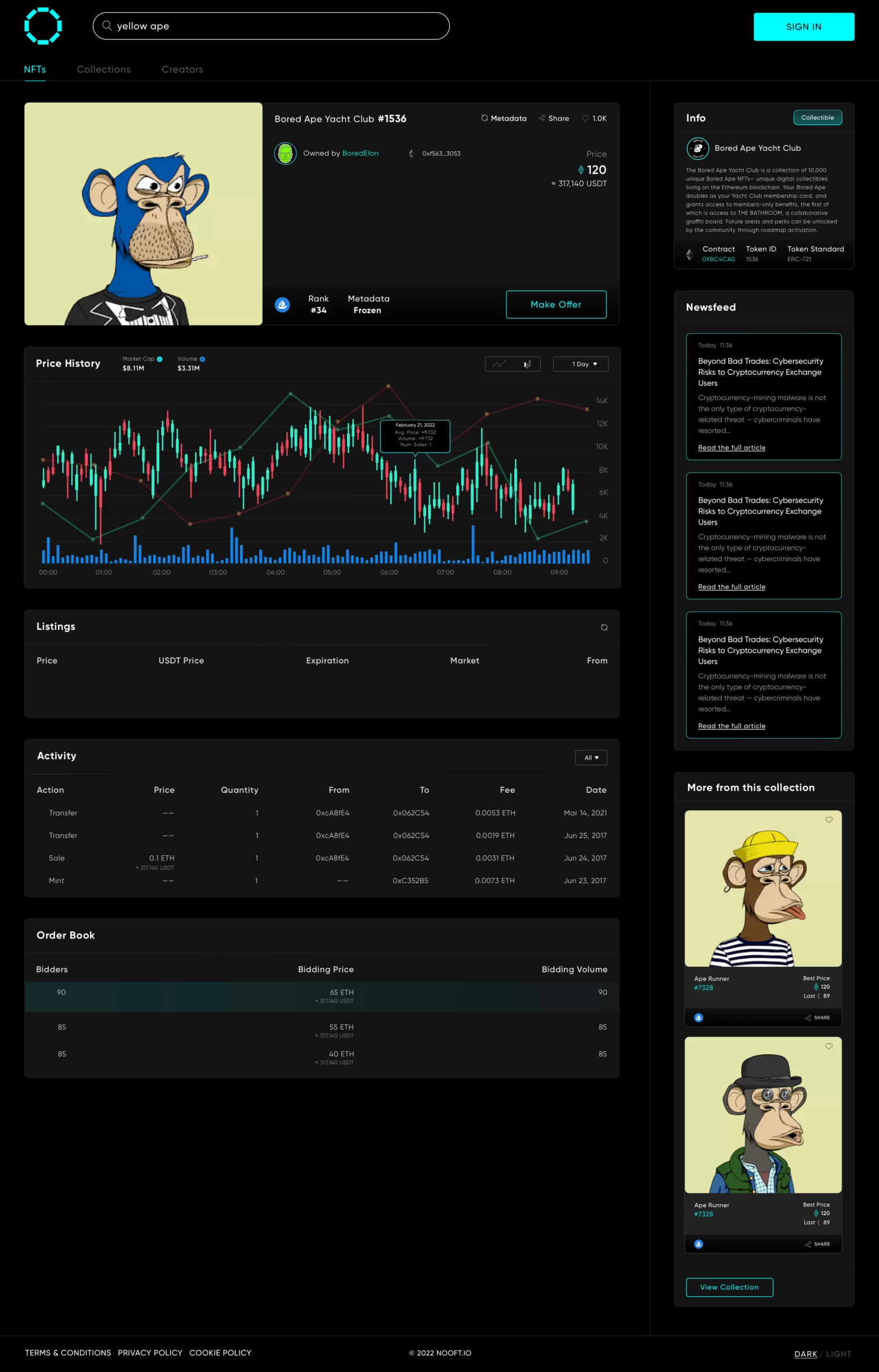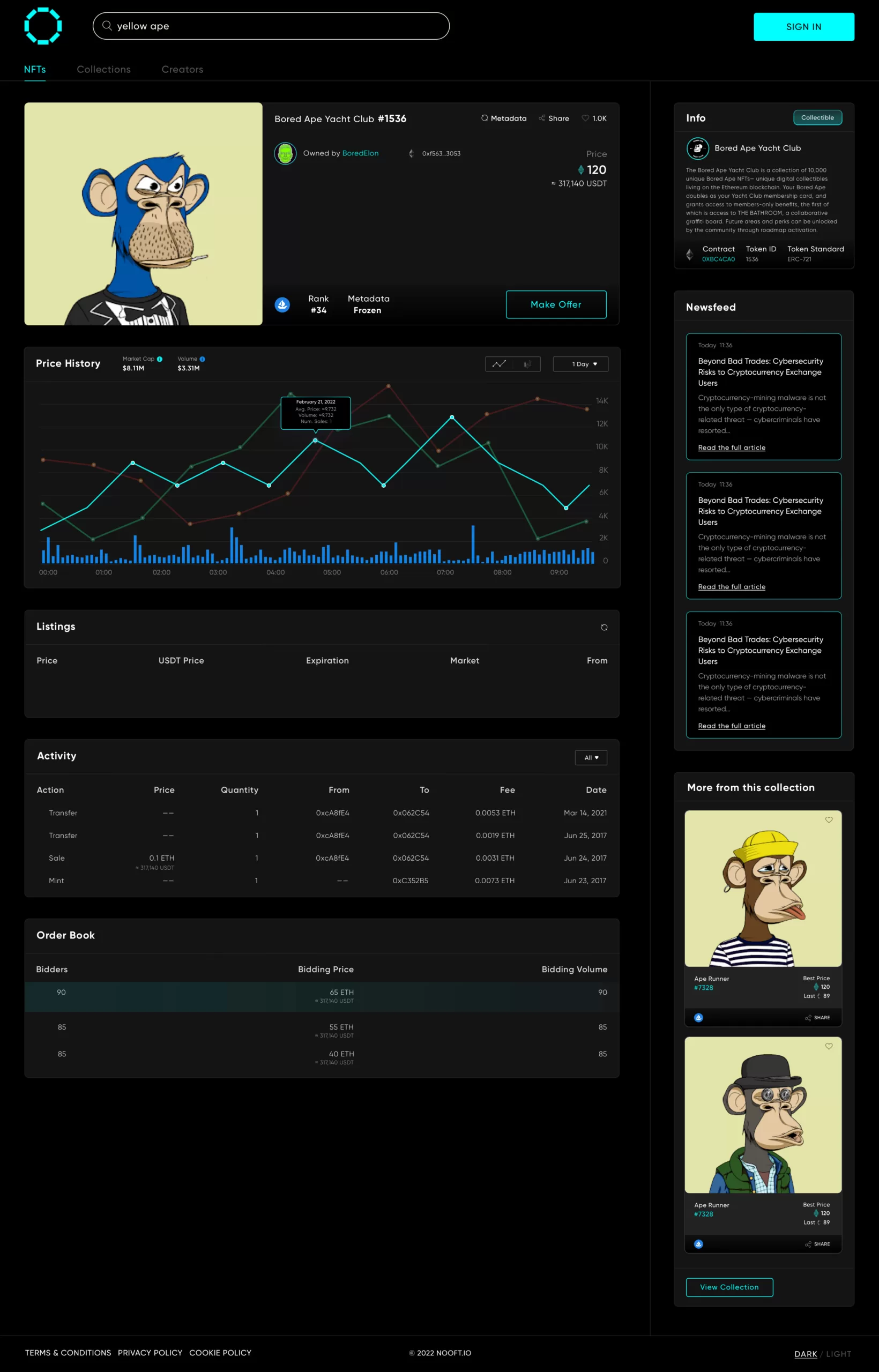
Nooft – End-to-End Search Engine for NFTs
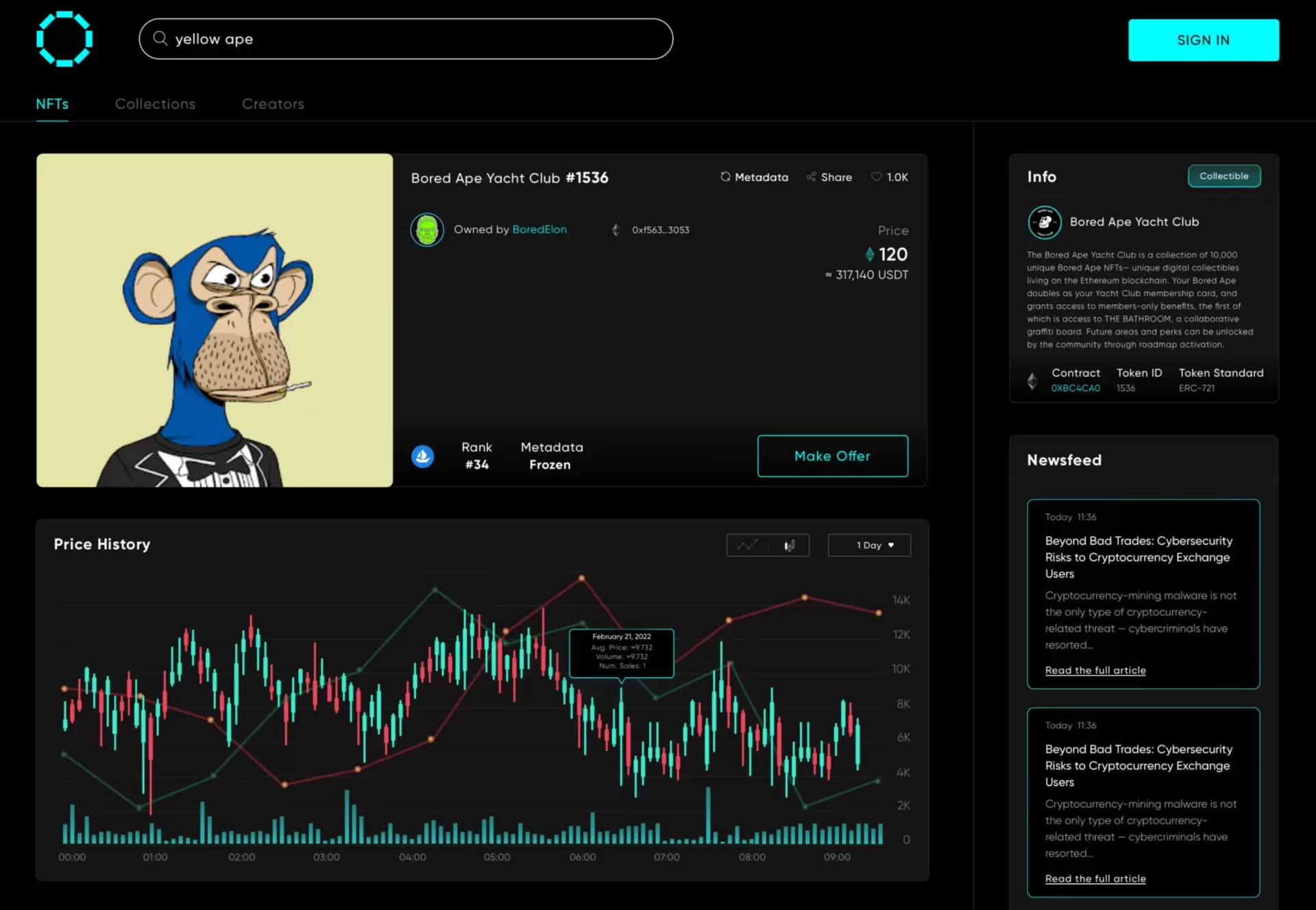
As the sole UX Designer for Nooft’s search engine project, I designed and coordinated the front-end team through a comprehensive 4-months journey.
My responsibilities spanned the entire gamut of UX Design, encompassing roles like Research, Visual Design, Interaction Design, Usability Testing, UX Engineering, and Product Design and Lead.
End-to-End Flows
Figma, Sketch, Visual Studio Code
UX Designer (UX Research, UX Design, Visual Design, Interaction Design, Usability Testing)
Self Directed, with feedback from the team and focus groups
4 Months
In the initial phase, our exploration focused on three primary areas:
This broad scope helped in understanding the diverse landscape of digital asset trading and NFT commerce.
The project’s business requirements were clearly articulated by stakeholders, outlining desired functionalities. However, the responsibility for shaping the Information Architecture, User Experience, and Visual Design (UI) was mine.
After a thorough examination of the business requirements and correlating them with our research findings, we identified essential UI components. Given that our product was being developed for the Web 3.0 environment within the fintech sector, I recognized the need for innovative UI components. These components had to resonate with our target users’ mental models, differing from classical UI elements typical in more conventional applications.
We defined three distinct user personas:
For each persona, we developed specific UI elements tailored to their needs and expectations.
To effectively demonstrate the behavior of our novel UI components, I engaged directly with React to prototype key interface flows, such as login and registration processes. This hands-on approach in UX engineering facilitated a more nuanced and practical understanding of our product’s user interface.